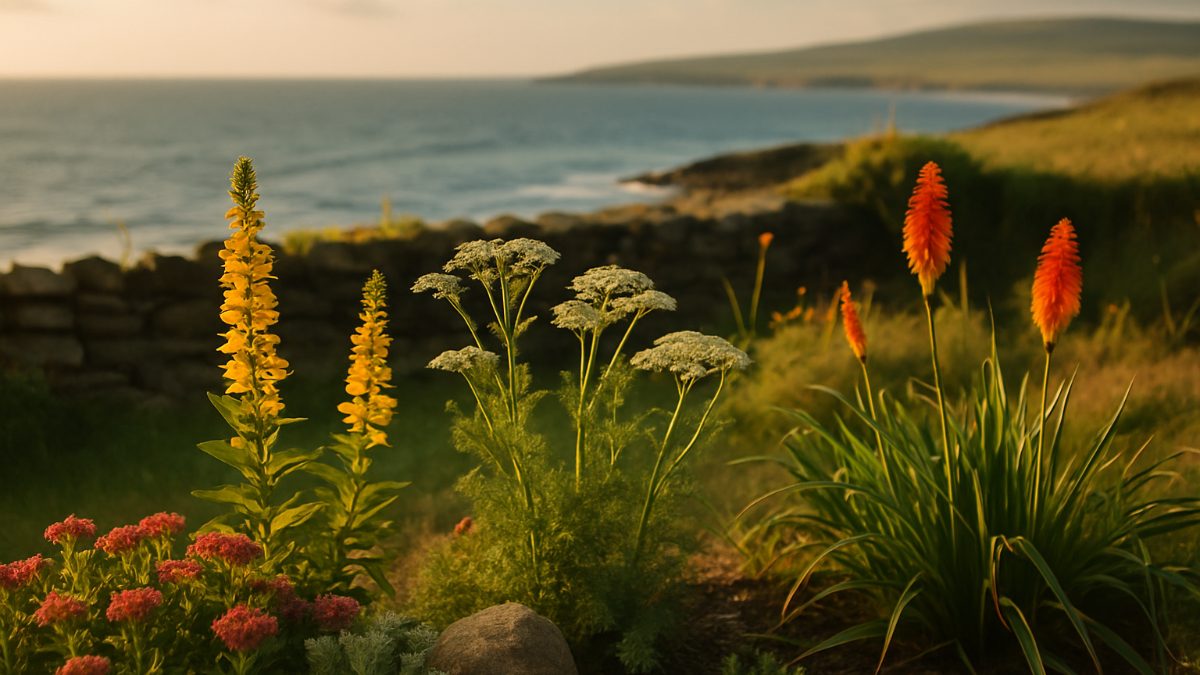
Gardening on the Clare coast is a lesson in humility. You pick something out at a garden centre, plant it with care, and by February it looks like it lost a fight with the Atlantic. Salt burn, waterlogging, wind scorch, the occasional frost, and soil that swings between bog-wet clay and thin, sandy grit depending on where exactly you are. It takes a while to stop fighting the conditions and start working with them.
These five plants have proved themselves in west Clare gardens, and in similar spots along the coast further north. They are not exotic or expensive. They just get on with it.
Escallonia
If you have seen a thick, glossy hedge near a west of Ireland farmhouse, there is a good chance it is escallonia. It handles salt spray better than almost anything, keeps its leaves through winter, and produces small pink or red flowers through summer. Clip it once a year and it stays dense. It will not win any awards for glamour but as a windbreak that also looks decent, it is hard to beat. Plant it on your most exposed boundary first and let it shelter whatever you want to grow behind it.
Phormium (New Zealand Flax)
Phormium looks architectural and dramatic, which makes people assume it is fussy. It is not. The strap-like leaves shrug off coastal wind, it tolerates poor drainage, and once established it needs almost nothing from you. The bronze and green varieties tend to be tougher than the fancier variegated ones. It will not take long to realise that it earns its place in nearly every west Clare garden you visit.
Fuchsia
Fuchsia is so common along western hedgerows that it barely seems like a garden plant anymore, but that familiarity is the point. It naturalises here because the conditions suit it perfectly. The arching stems, the hanging red and purple flowers from July through October, the way it comes back hard after even a tough winter. Grow it as an informal hedge or let it sprawl against a wall. It will seed itself into gaps and cracks and generally do exactly what you want without being asked.
Pittosporum tenuifolium
A small tree or large shrub that handles coastal exposure well and grows reasonably quickly by Atlantic garden standards. The pale green, slightly wavy leaves catch the light nicely. It works well as a specimen plant or clipped into a screen. Some gardeners in Clare use it as an alternative to griselinia, which can struggle more in the wetter spots. Give it a sheltered start if you can and it will pay you back with several years of reliable growth.
Sea Thrift (Armeria maritima)
Nothing is better suited to a coastal garden than a plant that already grows on the cliffs. Sea thrift forms low cushions of grass-like foliage covered in round pink flowers through late spring and early summer. It needs almost no soil depth, tolerates salt and wind without complaint, and looks completely at home in a garden that has views of the sea. Tuck it into gravel, along a path edge, or at the front of a rockery. It is as close to self-sufficient as a plant gets.
The pattern with all of these is that they are survivors before they are showpieces. Gardens on this coast can be genuinely beautiful, but they tend to be built around plants that do not need coddling. If you are moving to a coastal property and thinking about what to do with the ground around it, this is a different starting point than most gardening advice assumes. Anyone who has bought or is considering buying a rural stone cottage on the Atlantic coast will know that the garden usually comes with its own very particular set of challenges alongside the house itself.