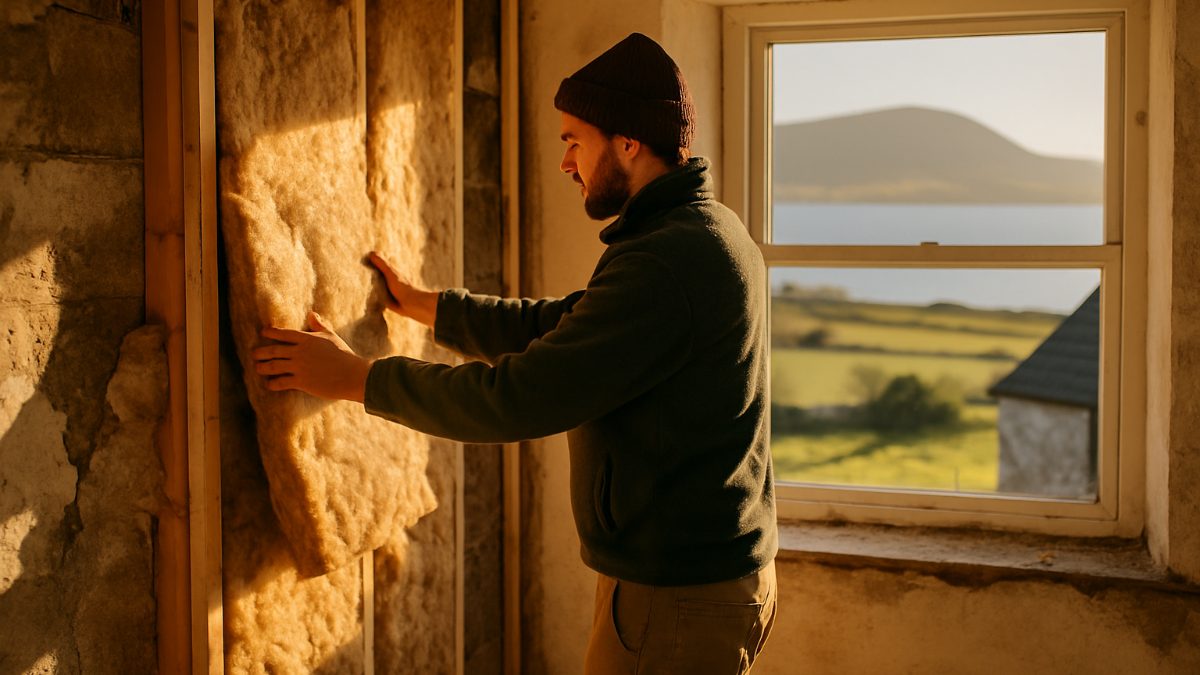
If you live in a draughty old farmhouse a kilometre from the nearest village, with Atlantic rain hammering the west gable every winter, the idea of a heat pump sounds very appealing. Running costs lower than oil, less dependence on fuel deliveries down a single-track road, a warmer house. The SEAI Better Energy Homes scheme can help pay for one, but getting from "good idea" to "grant in the bank" involves more steps than most people expect, especially if your home is older or has any kind of protected status.
Here is how the process actually works, and where the complications tend to show up.
Check whether your home qualifies
The scheme is open to homeowners whose property was built and occupied before 2011. That covers the vast majority of rural homes along the west coast. You need to own and live in the property as your primary residence, so holiday homes and rentals do not qualify under this particular scheme.
The bigger question for older rural structures is whether your home is insulated well enough to make a heat pump work properly. Heat pumps deliver lower flow temperatures than oil boilers, which means they rely on your home losing heat slowly. If warm air is escaping through bare stone walls, a leaking roof or single-glazed windows, the system will struggle and your bills may not fall the way you hoped. SEAI strongly recommends, and in practice almost requires, that you address insulation before or alongside the heat pump installation. That has cost implications worth thinking through early.
Find a registered contractor
You cannot use just any heating engineer. The installer must be registered with SEAI as an approved contractor for heat pump works. The register is searchable on the SEAI website, and it is worth checking that the contractor you are considering is listed before you agree anything. Some smaller contractors in rural areas are not registered, which is not a reflection on their competence but does mean they cannot process grant work through this scheme.
Get at least two quotes. Prices vary more than you might expect, and the quality of the heat loss assessment, which the installer needs to carry out before sizing the system, also varies. Ask specifically what they include in their survey and whether they have worked on solid-wall or stone construction before. If you have an old cut-stone or rubble-stone house, this matters.
Understand the grant amounts
The grant available depends on the type of heat pump. Air-to-water systems, which are the most common choice for rural homes replacing an oil boiler and wet radiator system, attract a grant of up to around six thousand euro at the time of writing, though the exact figures can change and you should confirm current amounts before committing to anything. Ground-source and water-source systems attract a higher grant but come with significantly higher installation costs and are less common in practice.
The grant does not cover the full cost. Installation of an air-to-water system including cylinder, controls and any radiator upgrades typically runs well into five figures depending on the size of your home and what needs replacing. The grant takes a useful chunk off that, but you are still making a substantial investment.
The protected structure complication
This is where things get harder for some homeowners along the coast. If your home is a protected structure, or if it sits within an Architectural Conservation Area, you may need planning permission for certain works, including external units, pipework and sometimes internal alterations. Your local authority is the first point of contact, not SEAI.
Even without formal protected status, older stone buildings along the western seaboard often have construction methods that complicate retrofit work. Solid stone walls cannot be insulated the same way as modern cavity walls. Internal wall insulation reduces room size and needs careful specification to avoid creating moisture problems. Some contractors are not experienced with this and can create problems that cost more to fix than the grant was worth.
If you are considering buying an older rural property and wondering what you are taking on, the realities of stone construction are worth understanding before you sign anything. The romantic appeal of a stone cottage is real, but so are the practical complications of bringing one up to a standard where a heat pump makes sense.
Apply before work begins
This is the most common mistake people make. The grant application must be submitted and approved before any installation work starts. If you have the heat pump fitted and then apply, you will not receive the grant. There is no flexibility on this point.
The application process itself is not complicated. You submit through the SEAI portal, your registered contractor is named on the application, and approval typically comes back within a few weeks. Once you have approval, the work can begin.
After the work is done
When installation is complete, your contractor submits a declaration of works. SEAI may carry out an inspection, particularly for larger grants or where there have been queries. Once everything is signed off, the grant is paid directly to you as the homeowner, not to the contractor, though some contractors will factor the expected grant into their payment schedule by agreement.
Keep all your documentation: the original quotes, the heat loss assessment, correspondence with SEAI, and the installation certificates. You will need some of this if you sell the house, and the Building Energy Rating your installer should provide after the works will reflect the upgrade, which matters for any future sale.
The process takes longer than people expect, often several months from first enquiry to completed installation, so if you are hoping to have a system running before next winter, starting in spring is not too early.