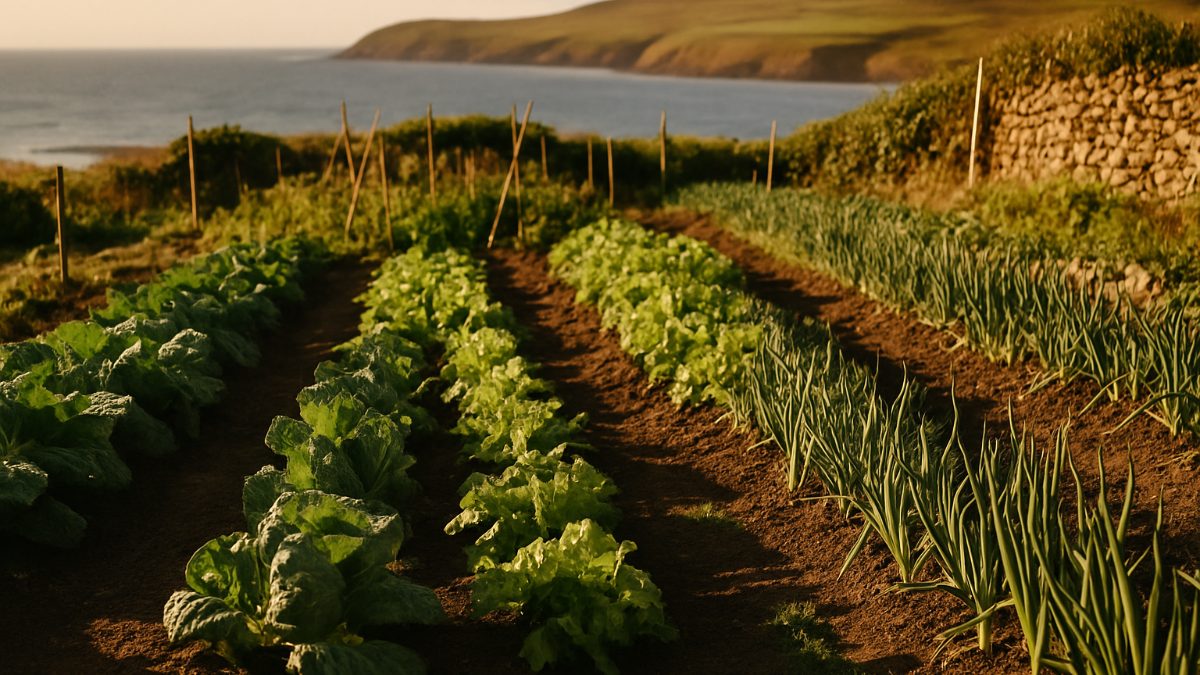
The first year on my allotment plot in Sligo taught me one thing above all else: the Atlantic does not care about your plans. I lost courgette plants to a single June gale, watched rows of spinach go horizontal and never recover, and pulled up what remained of my climbing beans in August like a defeated general retreating from a pointless battle. The soil was thin, the wind was relentless, and I nearly gave up.
I didn't, though. And the second year was different enough to feel like progress.
The windbreak came first
Before I sowed a single seed in year two, I put up a permeable windbreak mesh along the western and northern edges of the plot. Not a solid fence, which would just create turbulence on the leeward side, but the open-weave stuff that filters the wind rather than blocks it. I fixed it to timber posts driven well into the ground, because Sligo will test any post you haven't sunk properly. It took a weekend and cost more than I expected, but it changed the microclimate on the plot noticeably. Plants stayed upright. That alone felt like a revelation.
I also started thinking about the plot the way you think about a cycling route into a headwind: you work with the geography, not against it. You tuck in where you can, you find the angles that take the edge off. Tall crops went on the leeward side of the mesh. Lower, compact varieties went in the more exposed spots.
Variety selection matters more than anything
I stopped growing what I wanted to eat and started growing what the site would tolerate. Kale, perpetual spinach, chard, broad beans, and early potatoes. These are the workhorses of a windswept Atlantic plot. I'd read similar things in passing when looking into plants that can handle a west-facing coastal garden, and the overlap with vegetables is real. Tough, low-growing, deep-rooted. That's your shortlist.
Courgettes can still work, but only if you start them under cover late, transplant them into a sheltered corner, and accept that some years you'll still lose them. I grew two plants last summer behind a temporary cloche wall made of old pallets and got a reasonable harvest. Nothing like a sheltered garden in Wexford, but enough.
Soil building is slow and that's fine
The ground on my plot is free-draining to the point of being thirsty. I've been adding homemade compost, seaweed collected from the strand after storms, and well-rotted manure from a farm a few kilometres away. It takes time. Two years in, I can feel the difference in the texture when I'm digging, but it's still a work in progress.
If you're starting out on a similar site, don't underestimate how long soil improvement takes. Start a compost heap before anything else. That's the one piece of advice I'd go back and give myself at the beginning.