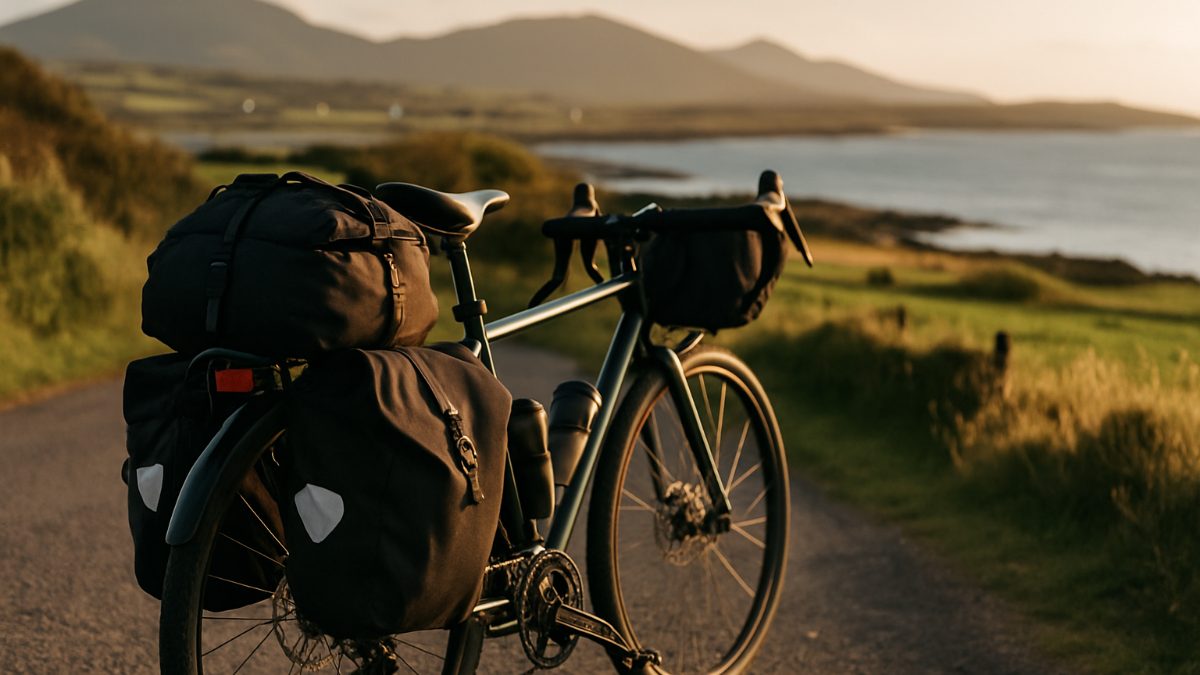
Ireland's Atlantic coast is one of the best places in the world to tour by bike. It is also one of the most demanding. The roads west of the N59 corridor are narrow, often patched rather than resurfaced, and the shoulders where they exist at all tend to be loose chippings, grass, or simply a sharp drop to the ditch. Add salt-laden air that quietly corrodes anything metal, prevailing westerlies that can pin you to a crawl, and you have a riding environment that rewards a properly set-up bike and punishes a poorly thought-out one.
This guide walks through the main things to get right before you head out on a multi-day Atlantic coast tour. None of it is complicated, but the details matter more here than on smoother, more sheltered routes.
Start with the frame and fit
Comfort over four or five days comes down to fit more than any component. A position that feels fine for an hour becomes miserable by day two if your reach is too long or your saddle height is a few millimetres off. Get a proper fit before you go, or at least spend a few long days in the saddle before the tour to dial it in.
Steel frames are worth considering for Atlantic touring. They absorb road vibration better than aluminium, they are easy to repair or weld if something goes wrong in a small town, and they handle corrosion from salt air reasonably well with basic maintenance. Titanium is excellent but expensive. Aluminium is fine if it is what you have, just keep an eye on it.
Gearing: go lower than you think you need
The west of Ireland is not the Alps, but the climbs are relentless. Short, punchy hills that come one after another all day, often into a headwind, add up to something much harder than the elevation profiles suggest. Cycling into a persistent Atlantic headwind can feel like climbing even on the flat, which is something you only fully understand once you have done it.
For a loaded touring bike on these roads, aim for a lowest gear somewhere around 22 to 26 inches of gear development, or lower if you are carrying heavy bags. On a standard drivetrain, a 34-tooth chainring paired with a 32 or 34-tooth cassette gets you there. If you are running a single chainring, something in the 38 to 40-tooth range up front with a wide-range 11-42 cassette works well. Gravel groupsets with wide-range gearing have made this easier in recent years.
Do not be embarrassed about being in your easiest gear on a loaded bike in the wind. Nobody out here is watching.
Tyres: width and puncture resistance
This is probably the single most important setup decision for Atlantic coast touring. Road bike tyres in the 25 to 28mm range are too narrow for this terrain. The road surfaces vary enormously, sometimes within a few kilometres, and you will encounter sections where the tarmac gives way to gravel, mud, or rough patching without warning.
Aim for at least 35mm, and 40 to 45mm is better if your frame allows it. A gravel or touring tyre in this width gives you confidence on loose surfaces, cushions the constant vibration from rough tarmac, and dramatically reduces pinch flats when you clip a pothole edge. Carry at least two spare inner tubes and a patch kit. Puncture-resistant tyres like the Schwalbe Marathon range or similar are worth the extra weight for multi-day touring.
Run them at lower pressures than you would on smooth roads. Around 40 to 50 psi for a loaded 40mm tyre is a reasonable starting point. You can feel out what works on the first morning.
Luggage: low and balanced
Panniers on a rear rack are the traditional setup and still the most practical for most tourers. Keep the weight as low as possible. High-mounted bags and oversized drybags on top of racks shift your centre of gravity up and make the bike squirrely on descents and in crosswinds. Both of those are things you will meet regularly on Atlantic roads.
Front panniers on a low-rider rack make a noticeable difference to handling. Even a small amount of weight over the front wheel stabilises the steering. If you are doing this seriously over several days, the front-and-rear setup is worth the extra faff of fitting a second rack.
Keep your total loaded weight under around 15 kilograms if you can manage it. That is your bags plus everything in them. It sounds tight but it is achievable with some discipline around clothing. Atlantic touring weather means you need waterproofs regardless, but beyond that, layers and merino wool go a long way.
Corrosion: the thing people forget
Salt air is genuinely corrosive. After a few days riding in coastal conditions, especially if you get caught in rain driven off the sea, your chain, cables, and any exposed metal will show it. A good wet lube on the chain before you set out and again every day or two is basic maintenance here. Wipe the chain before you re-lube rather than building up a gritty residue.
Cable ends rust faster than the cables themselves. Check that your gear and brake cables are capped properly before you leave. Stainless steel cables are worth fitting if you are replacing them anyway.
After the tour, give the whole bike a rinse with fresh water and re-lube before putting it away. It takes twenty minutes and it makes a real difference to how the bike performs next time out.