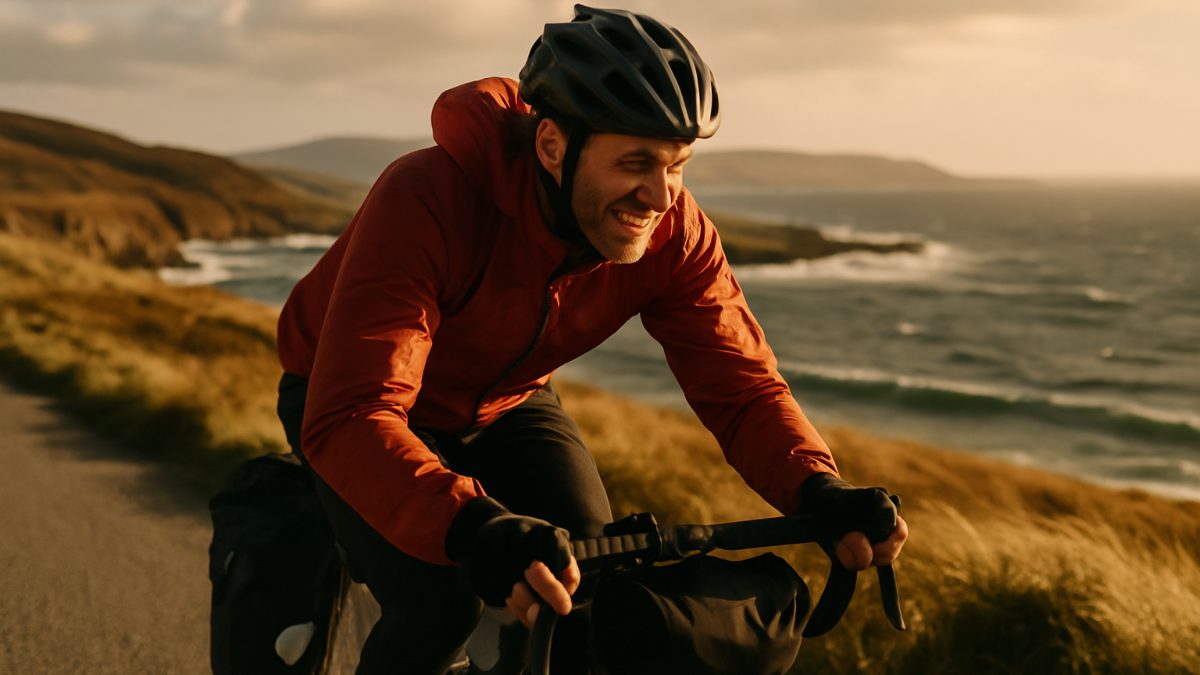
I left Malin Head at half seven on a Tuesday morning in late September, feeling quietly pleased with myself. I had a full water bottle, a bag of overnight oats I'd made the night before in the hostel kitchen, and what I was convinced was a sensible plan. The wind had other ideas.
By the time I reached Carndonagh, maybe fourteen kilometres south, I had revised my entire understanding of what the word headwind means. Not the breezy inconvenience you get on a bike path near a city. A sustained, physical, almost personal opposition. The kind of wind that makes you feel like the road itself is pushing back.
That day taught me more about cycling the northern Atlantic coast than any amount of reading had. Here is what actually stuck.
Pacing from the very first pedal stroke
The classic mistake on an exposed day is to start too hard. You feel good, the road is empty, the views are extraordinary, and you want to move. But the energy you burn fighting a headwind in the first hour is energy you will not have for the long middle section of the day, when the novelty has worn off and there is still fifty kilometres to go.
I made that mistake. I pushed too firmly out of Malin Head because I was energised and the light was beautiful. By Clonmany I was already eating into reserves I needed for later. The correction was dropping my gear and accepting a slower cadence. Not giving up, just doing the arithmetic properly. A pace you can hold for six hours beats a pace you can hold for two.
On a big exposed touring day, treat your effort like a budget. Spend it slowly at first, and keep something back for the afternoon.
Where to shelter, and when to stop
This stretch of Donegal is not short of coast, and coast means exposure. Between Malin and Ballyliffin the road runs with very little natural shelter. The hedges get low, the fields open out, and you are simply in it. There is no technique that removes a headwind from your life. You can tuck lower, you can draft behind a wall when one appears, but mostly you just ride through it.
What matters is knowing when to stop, not to quit but to recover briefly. I started taking short breaks of five or ten minutes whenever I found a sheltered spot: a petrol station forecourt in Carndonagh, a low wall beside a church outside Ballyliffin, a pub in Clonmany where the woman behind the counter made me a coffee without me even asking properly. These stops are not wasted time. They let your shoulders drop, your breathing settle, and your legs return to something like normal before the next stretch.
Plan your shelter stops the same way you plan your food and water. Know roughly where they might be, and do not feel obliged to push past them out of pride.
What to eat before a long exposed day
The overnight oats were a good call. I say that not to congratulate myself but because I have done these days on toast and coffee and it does not end well. Something substantial, slow-releasing and easy on the stomach makes a genuine difference when you are two hours in and the road ahead is still very long.
Porridge, overnight oats, eggs if the place you are staying does them. Before a big exposed day on the Atlantic coast, eat like you mean it. Not so much that you feel heavy on the bike, but enough that you are not thinking about food before you reach your first stop.
Carry more snacks than you think you need. I had three bars and a banana. I ate all of it before Ardara. On a headwind day your body is working significantly harder than on a calm one, and it will let you know.
What I would do differently
I would start earlier to use whatever calm the morning offers before the wind picks up. I would carry a proper rain jacket accessible without stopping, because on this coast the weather shifts fast and rooting through a pannier in a squall is miserable. And I would build the setup of the bike itself around long Atlantic days specifically, not just general touring comfort.
I got into Donegal Town at around six in the evening, later than I had hoped, slower than I wanted, but genuinely satisfied in a way that easier days rarely produce. The headwind, for all its unpleasantness, earned the arrival.