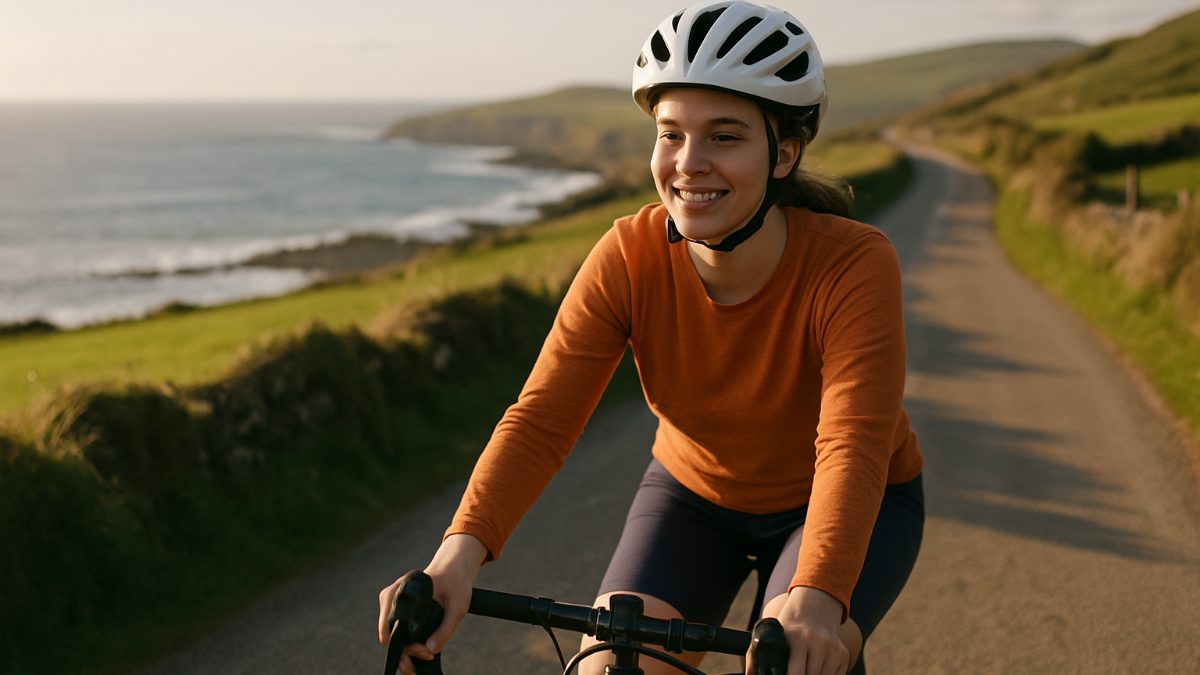
Most beginner cycling advice on the internet was written with somewhere flat and dry in mind. The Netherlands, maybe, or a sunny rail trail in California. It is friendly advice, and some of it is fine, but it does not prepare you for pulling onto a narrow road in County Clare with a crosswind coming off the Atlantic, a sheep standing in the middle of the tarmac, and a van driver who seems entirely unbothered by any of it.
If you are just starting out with cycling on Ireland's west coast, here are the things that tend to catch people off guard.
The road surface is not what you expect
Irish coastal roads vary enormously, sometimes within a single kilometre. You might have a stretch of smooth tarmac, then loose chip-and-spray surface, then a section that has basically dissolved at the edge where the verge has undercut it. Rural roads here get resurfaced on a county council schedule that does not always keep pace with what Atlantic weather throws at them.
The practical upshot for beginners: do not hug the very edge of the road. It feels instinctive to stay as far left as possible, but the worst surface is often right at the margin, where water sits and the edge crumbles. Ride a bit further out than you think you need to. You will be more visible and you will hit fewer potholes.
Tyres matter more here than on a dedicated cycle path. A tyre that is too narrow or too hard will transfer every surface irregularity straight into your hands and lower back. For coastal touring, something in the 32mm to 40mm range with a bit of give is much more forgiving than a road racing tyre. If you are thinking about a longer trip and want to think through your setup properly, the post on setting up a bike for multi-day Atlantic touring goes into this in more detail.
Single-track roads are not as scary as they look, but there are rules
A lot of the most beautiful coastal riding in Ireland happens on single-track roads. One lane, two directions, passing places cut into the verge every hundred metres or so. If you have not cycled on them before, the first time a tractor comes the other way it can feel alarming.
The thing to understand is that drivers on these roads are generally experienced at sharing them. They slow down. They pull in. They wait. Rural Irish drivers on quiet roads are, in most cases, far more patient with cyclists than city drivers are. The problems tend to come not from the locals but from hire cars driven by tourists who are still figuring out the road width, which is a version of the same problem you might have.
Keep your speed manageable on single-track sections, especially on bends where you cannot see what is coming. If you are going downhill and picking up speed, ask yourself whether you could stop in the distance you can see. On a wet Irish road, the answer to that question changes fast.
Atlantic weather windows are real, and short
People talk about Irish weather as though it is uniformly miserable, which is not fair, but the Atlantic coast does have its own particular rhythm. You can get three or four days of calm, clear weather followed by a day of driving rain and 50km/h gusts. The gaps in between, especially in shoulder seasons like April, May, September and October, can be genuinely spectacular.
The beginner mistake is waiting for a perfect forecast and then either never going, or going unprepared when the forecast turns out to be wrong. Better to learn to read the weather roughly and carry the right gear. A decent waterproof jacket and overshoes will keep you comfortable in light rain. In a proper Atlantic downpour, nothing keeps you entirely dry, but staying warm matters more than staying dry.
Wind direction is probably more important than rainfall for a new cyclist. A headwind on a coastal road can make a gentle 20-kilometre ride feel like serious work. If you can, plan your day so the wind is broadly behind you in the afternoon, when it often picks up. There is a longer, more honest account of what riding into a sustained Atlantic headwind actually feels like in the post about cycling from Malin Head to Donegal Town, which is worth reading before you plan a route in the north-west.
Start shorter than you think you need to
New cyclists consistently overestimate how far they want to ride. Coastal terrain looks flatter on a map than it is. Headlands have rolls and climbs that do not register as hills but accumulate over a day. The wind adds invisible effort. Thirty kilometres on an exposed Atlantic road is a different thing from thirty kilometres on a cycle path.
Pick a destination that feels almost too easy for your first few rides. If you finish feeling like you had more in you, that is exactly right. You will come back the next day, and the day after that, which is how this actually works.